Japanese Chubby Gay: A Growing Community and Cultural Shift
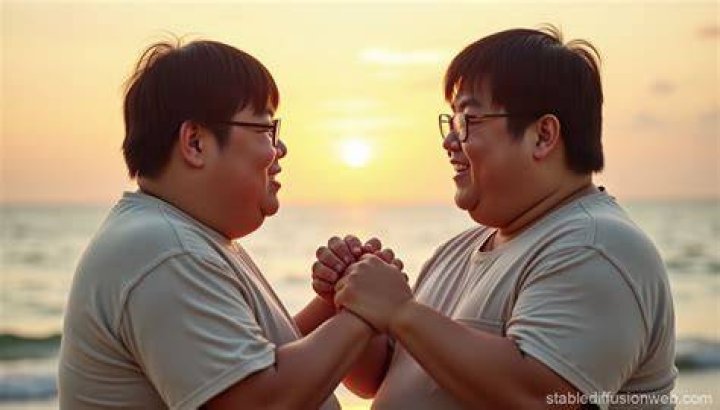
In the bustling streets of Tokyo’s Shinjuku Ni-chome, a quiet revolution is taking place. It’s not just about rainbow flags or pride parades. It’s about bodies—specifically, bodies that don’t fit the traditional mold of slim, toned, and hairless. The term “japanese chubby gay” has emerged as a distinct identity within Japan’s LGBTQ+ community, challenging long-held beauty standards and carving out a space for men who love men and love their curves.
For decades, Japan’s gay scene has been heavily influenced by Western ideals of masculinity and physique. Think of the ubiquitous “twink” or “muscle bear” archetypes. But a third category is gaining traction: the “chubby” or “debu” (fat) gay man. This isn’t just about weight; it’s a cultural statement. It’s about rejecting the pressure to conform to a single body type and embracing a more inclusive vision of desirability.
“I used to think I had to lose weight to be loved,” says Kenji, a 34-year-old office worker from Osaka who identifies as a japanese chubby gay. “But I realized that my body is not a problem to be fixed. It’s part of who I am. And there are people who genuinely find that attractive.” His story is not unique. Across Japan, from online forums to dedicated bars, a community is forming around this specific identity.
The Roots of the “Chubby” Identity in Japan
To understand the japanese chubby gay phenomenon, you have to look at the broader context of body image in Japan. The country has a notorious obsession with thinness, particularly for women, but men are not immune. The ideal male body in mainstream media is often lean, with low body fat and defined muscles. This pressure is amplified in the gay community, where dating apps and hookup culture can be brutally superficial.
However, a counter-movement has been brewing. The term “chubby” in English has been adopted into Japanese gay slang, often used alongside “debu” or “maru” (round). It’s a reclamation of a word that was once used as an insult. This is similar to how the “bear” community in the West reclaimed a term for larger, hairier men. But the japanese chubby gay identity has its own unique flavor, blending local aesthetics with global influences.
Historically, Japan has had a more fluid relationship with male-male desire, as seen in the samurai traditions of shudo (the way of the youth) and the erotic art of shunga. But modern, Western-influenced gay identity brought with it a rigid set of body standards. The japanese chubby gay community is, in many ways, a reaction to that rigidity. It’s a search for authenticity in a world that often demands you shrink yourself—literally and figuratively.
Dating and Relationships: Finding Love Beyond the Scale
Dating as a japanese chubby gay man comes with its own set of challenges and triumphs. On mainstream apps like Grindr or 9monsters, profiles often explicitly state preferences for “slim” or “muscular” men. A chubby man might face rejection before a single message is sent. But niche platforms and communities are changing the game.
“There’s a specific app called ‘Debu-kei’ that’s popular among chubby gay men and their admirers,” explains Hiro, a 28-year-old graphic designer. “It’s a safe space where you don’t have to explain yourself. You can just be.” These digital spaces are crucial. They allow men to connect based on shared experience and attraction, bypassing the judgment of the mainstream.
Real-world meetups are also thriving. In Tokyo, there are regular “chubby parties” at certain gay bars in Shinjuku Ni-chome. These events are not just about hooking up; they are about building community. Men come to dance, talk, and feel seen. The atmosphere is noticeably less tense than at a typical gay club, where the pressure to look a certain way can be overwhelming.
“The first time I went to a chubby party, I almost cried,” says Kenji. “I saw men who looked like me, laughing and flirting. I felt like I belonged somewhere for the first time.” This sense of belonging is the core of the japanese chubby gay experience. It’s about finding a tribe in a society that often makes you feel invisible.
Representation in Media and Pop Culture
Representation of the japanese chubby gay man in mainstream media is still rare, but it is growing. In recent years, a few television dramas and films have begun to explore diverse body types within LGBTQ+ narratives. The hit series Ossan’s Love (2018) featured a chubby, older protagonist, which was a refreshing change from the usual young, slim leads. While not explicitly about the “chubby gay” identity, it opened a door.
Manga and anime, long a haven for queer storytelling, have also seen a rise in “chubby” characters. The Bara genre (gay manga for men, by men) has always celebrated larger, hairier bodies. But now, more mainstream yaoi (boys’ love) is starting to include characters with diverse physiques. This is slowly normalizing the idea that a gay man can be desirable without being skinny.
Social media has been a powerful tool for this shift. Instagram and Twitter accounts dedicated to the japanese chubby gay aesthetic are gaining followers. These accounts post photos of real men, not airbrushed models. They celebrate bellies, thick thighs, and soft features. It’s a form of activism through visibility.
“When I see a photo of a chubby gay man looking happy and confident, it gives me hope,” says Taro, a 22-year-old university student. “It tells me that I don’t have to change to be worthy of love.” This grassroots representation is arguably more impactful than any corporate pride campaign.
Health, Wellness, and Body Positivity
The conversation around the japanese chubby gay identity is not without its complexities. There is a delicate balance between body positivity and health concerns. The community is careful not to promote unhealthy lifestyles, but rather to challenge the stigma that equates fatness with laziness or ugliness.
“We talk about health, but we don’t use it as a weapon,” says Dr. Yuki Tanaka, a psychologist who specializes in LGBTQ+ issues in Tokyo. “The goal is to help men feel good in their bodies, regardless of size. If someone wants to lose weight for health reasons, that’s fine. But it should come from a place of self-care, not self-hatred.”
Many japanese chubby gay men are active in sports and fitness, but on their own terms. There are gay-friendly gyms and sports clubs that are body-inclusive. The rise of “chubby yoga” and “big guy hiking” groups shows that wellness can be pursued without the pressure to become a muscle god.
The body positivity movement in Japan is still in its infancy compared to the West. But within the gay community, it is gaining momentum. The japanese chubby gay identity is a key part of this movement. It’s a reminder that desirability is not a one-size-fits-all concept.
Challenges and the Road Ahead
Despite the progress, significant challenges remain. Discrimination within the gay community is still rampant. Some gay men openly mock or exclude chubby men. Internalized fatphobia is a major issue, with many men struggling to accept their own bodies even as they seek acceptance from others.
“I’ve been told I’m ‘wasting my potential’ because I’m chubby,” says Hiro. “As if my body is a project that needs to be completed.” This kind of pressure can be crushing. It’s a reminder that the fight for acceptance is not just external; it’s deeply internal.
Family acceptance is another hurdle. Coming out as gay is difficult enough in Japan, where societal pressure to marry and have children is strong. Adding a non-normative body type to the mix can make things even harder. Many japanese chubby gay men face double rejection: from their families for being gay, and from parts of the gay community for being fat.
Yet, the community is resilient. Online support groups, counseling services, and community centers are providing resources. The annual Tokyo Rainbow Pride parade now includes a “body positive” float, where chubby gay men walk proudly. These small acts of visibility are chipping away at the stigma.
Global Connections and Local Identity
The japanese chubby gay community is not isolated. It is part of a global network of “chubby” and “bear” communities. International events like the “Bear Week” in Provincetown or “Chubster” parties in London have Japanese attendees. But the Japanese experience has its own unique texture.
“In the West, the bear community is very much about hyper-masculinity,” notes Kenji. “In Japan, it’s softer. It’s more about cuteness and comfort. We have a word, ‘kawaii,’ that applies even to chubby men. It’s a different aesthetic.” This blend of global and local creates a distinct identity that is both part of a larger movement and uniquely Japanese.
Language plays a role too. The use of English terms like “chubby” alongside Japanese words creates a hybrid vocabulary. This reflects the community’s position at the intersection of cultures. It’s a way of claiming a space that is neither fully Western nor fully traditional.
Practical Tips for Allies and Community Members
For those looking to support the japanese chubby gay community, the first step is to check your own biases. Ask yourself: Why do I assume a certain body type is more attractive? Why do I use words like “fat” as an insult? Unlearning these prejudices is an ongoing process.
If you are a japanese chubby gay man yourself, know that you are not alone. Seek out community, whether online or in person. Start with apps like “Debu-kei” or search for local meetups. Remember that your body is not a barrier to love; it is a vessel for your unique self.
For content creators and media professionals, include diverse body types in your stories. Show chubby gay men as romantic leads, as heroes, as everyday people. Representation matters because it shapes what we believe is possible.
Conclusion: A Future of Inclusion
The story of the japanese chubby gay community is still being written. It is a story of resistance, of joy, and of quiet determination. In a world that often tells you to be smaller, these men are choosing to take up space. They are redefining what it means to be desirable, to be loved, and to be gay in Japan.
The path forward is not easy. There will be setbacks and disappointments. But the momentum is real. Every time a chubby gay man posts a selfie, every time a bar hosts a body-positive event, every time a drama features a non-slim lead, the world shifts a little. The japanese chubby gay identity is not a niche; it is a vital part of the rich tapestry of human experience. And it deserves to be seen, celebrated, and understood.
