Hasumi Yoshioka: The Quiet Force Redefining Japanese Cinema
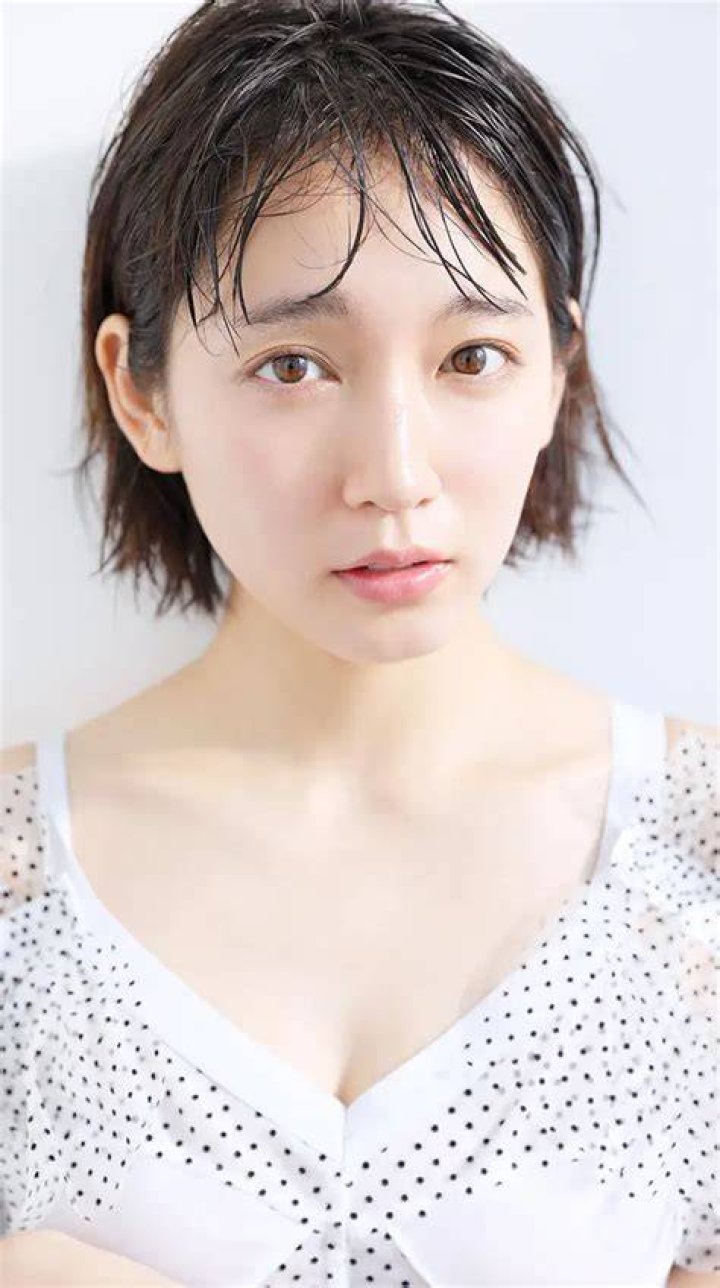
There’s a certain stillness to Hasumi Yoshioka that feels almost out of place in today’s hyperactive world. She doesn’t shout for attention. She doesn’t need to. In an industry that often rewards the loudest, the most dramatic, the most scandalous, Yoshioka has carved out a space that is entirely her own—quiet, deliberate, and devastatingly effective.
If you haven’t heard of her yet, you will. The name Hasumi Yoshioka has been circulating through film festivals, indie screening rooms, and now, increasingly, mainstream conversations. But who is she, really? And why does her work feel so different from the rest?
Let’s start at the beginning. Born in Tokyo, Yoshioka didn’t grow up dreaming of red carpets. She wasn’t the child actor pushed by stage parents. Instead, she stumbled into acting almost by accident—a chance audition, a small role, and then a quiet realization that this was where she belonged. That accidental quality still lingers in her performances. She doesn’t seem to be acting. She seems to be living.
Her early work was modest. Small-budget films, supporting roles, the kind of credits that build a resume but don’t make headlines. But even then, directors noticed something. She had a way of holding a scene without saying a word. Her eyes did the work. Her silence spoke louder than most actors’ monologues.
Then came the breakthrough. It wasn’t a blockbuster. It wasn’t a big-budget production. It was a quiet, character-driven drama that premiered at a minor festival. But critics saw it. And they wrote about it. And suddenly, Hasumi Yoshioka was no longer just a name on a casting sheet.
What makes her so compelling? It’s hard to pin down. She doesn’t fit the typical mold of a Japanese star. She’s not the bubbly idol type, nor the stoic, traditional figure. She exists somewhere in between—fragile but resilient, soft but unyielding. Her characters often carry a weight that isn’t spoken aloud. You feel it in the way she breathes, the way she pauses, the way she looks away.
Take, for instance, her role in the film “The Long Goodbye.” She played a woman returning to her hometown after years away, forced to confront the ghosts she left behind. The script was sparse. The dialogue minimal. But Yoshioka filled every empty space with emotion. One scene, where she simply sits on a park bench and watches the rain, became the most talked-about moment of the film. No words. Just rain. Just her. And it was unforgettable.
That’s the thing about Hasumi Yoshioka. She makes the ordinary feel monumental. She finds drama in the mundane. She reminds us that the most powerful stories are often the ones that happen in the spaces between words.
Her rise hasn’t been without challenges. The Japanese film industry is notoriously insular. Breaking through requires more than talent—it requires connections, timing, and a bit of luck. Yoshioka had the talent. The rest came slowly. She faced rejection. She faced roles that didn’t challenge her. She faced the pressure to conform to a certain image. But she refused. She waited for the right parts, the right directors, the right stories.
And it paid off. Today, she’s working with some of the most respected filmmakers in Asia. Her filmography includes collaborations with directors known for their exacting standards and artistic vision. She’s been praised for her willingness to take risks, to play characters that are flawed, messy, and deeply human.
One of her most recent projects, “The Silent Shore,” premiered at the Busan International Film Festival to standing ovations. The film, a meditation on grief and memory, features Yoshioka in a role that demands both physical and emotional endurance. She spent months preparing—learning to free-dive, studying the movements of marine life, and immersing herself in the psychology of loss. The result is a performance that feels almost documentary-like in its authenticity.
Critics have started using words like “transcendent” and “once-in-a-generation” to describe her work. But Yoshioka herself remains grounded. In interviews, she’s soft-spoken, thoughtful, and often self-deprecating. She deflects praise, preferring to talk about the craft rather than the acclaim. She reads voraciously—literature, philosophy, poetry—and credits those books with shaping her understanding of character and motivation.
“I don’t think of acting as pretending,” she said in a rare interview. “I think of it as understanding. If I understand someone deeply enough, I can become them. But I have to be honest. I can’t fake understanding.”
That honesty is palpable in every frame she occupies. There’s no artifice. No performance for the sake of performance. She strips away everything unnecessary until only the truth remains. It’s a rare quality in any art form.
Her influence is starting to extend beyond film. Fashion brands have taken notice. She’s been featured in editorials for major magazines, not because she fits a certain look, but because she embodies a certain attitude—understated, elegant, and unapologetically real. She doesn’t chase trends. She doesn’t court publicity. She simply exists, and that existence is magnetic.
But let’s be clear: Hasumi Yoshioka is not a celebrity in the Western sense. She doesn’t have millions of Instagram followers. She doesn’t make headlines for her personal life. She keeps her private world tightly guarded. And that, paradoxically, makes her even more intriguing. In an age of oversharing, her restraint is a statement.
What’s next for her? Several projects are in the works. A historical drama set in feudal Japan. A psychological thriller that promises to push her into darker territory. And whispers of an international collaboration—a co-production with a European director that could introduce her to a global audience.
If that happens, don’t be surprised if Hasumi Yoshioka becomes a name you hear everywhere. But don’t expect her to change. She’s not the type to chase fame. She’s the type to let fame come to her, on her own terms.
There’s a lesson in her story, I think. It’s about patience. About trusting your instincts. About understanding that real talent doesn’t need to shout. It simply needs to be seen. And once it is, it’s impossible to forget.
Hasumi Yoshioka is that kind of talent. Quiet. Powerful. Unforgettable.
In a world that’s constantly screaming for attention, she whispers. And somehow, that whisper is louder than anything else.
