The Giantess POV: A Deep Dive into the Perspective of Scale
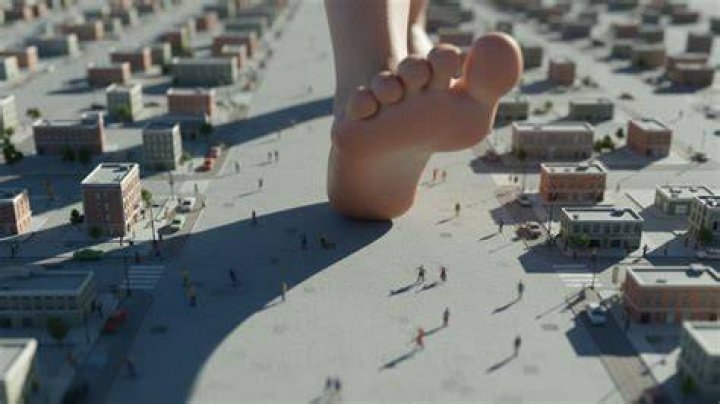
Imagine looking down at a city skyline from a height that makes skyscrapers look like toys. The cars below are tiny specks, the people invisible. This is the essence of the giantess POV—a narrative lens that places the viewer in the shoes (or rather, the eyes) of a woman of colossal proportions. It’s a perspective that has fascinated storytellers, artists, and audiences for decades, blending fantasy, power dynamics, and a profound sense of scale.
But what exactly is the giantess POV, and why does it hold such a strange, enduring grip on the human imagination? It’s not just about size. It’s about a shift in reality. When you adopt this viewpoint, the world becomes a diorama. A skyscraper is a stepping stone. A highway is a ribbon. The rules of physics and social interaction are rewritten. This article isn’t here to judge the fascination. It’s here to understand it.
We’ll trace the roots of this perspective from ancient mythology to modern digital art. We’ll look at the psychology behind the appeal—why some people find the idea of immense power and scale so compelling. And we’ll examine how the giantess POV has evolved in the age of the internet, becoming a niche but vibrant subculture with its own language, artists, and communities.
The Origins of the Giantess in Storytelling
The concept of giants isn’t new. From the Greek Titans to the Norse Jotnar, colossal beings have always populated our myths. But the specific focus on a female giant—and her point of view—is a more modern development. Early stories often used giants as obstacles or monsters. Think of the giant in “Jack and the Beanstalk.” He’s a threat, a force of nature. We don’t see the world from his eyes.
The shift toward the giantess POV began to emerge in the 20th century, particularly in pulp fiction and early cinema. Films like “The Amazing Colossal Man” (1957) and “Attack of the 50 Foot Woman” (1958) played with the idea of a human suddenly enlarged. But these were often horror or tragedy. The giantess was a victim of science, a spectacle to be feared or pitied.
It was in the realm of fantasy illustration and later, niche literature, that the perspective truly began to flourish. Artists like the legendary fantasy painter Boris Vallejo and later, digital creators, started to depict scenes from the giantess’s viewpoint. The focus shifted from the monster to the experience. What does it feel like to hold a tiny building in your hand? To watch a storm from above the clouds? This is the core of the giantess POV.
The Psychology of Scale: Why the Giantess POV Resonates
To understand the appeal, you have to look at the psychology of power and perspective. The giantess POV is fundamentally about a radical change in status. In everyday life, we are all roughly the same size. We interact on a level playing field. The giantess narrative throws that out the window.
For some, the appeal lies in the feeling of absolute control and dominance. The giantess is untouchable. She can reshape her environment with a single step. This can be a fantasy of empowerment, a release from the constraints of a world where you are often small and powerless. It’s a safe space to explore themes of authority and scale without real-world consequences.
For others, the fascination is more about the aesthetic of scale itself. The visual contrast between the immense and the minuscule is inherently striking. A giantess’s hand against a tiny car. Her foot next to a skyscraper. These images create a powerful sense of awe, similar to standing at the edge of a canyon. It’s a reminder of our own smallness in the universe, but framed through a human figure.
There’s also a strong element of vulnerability, often from the “tiny” perspective. Stories told from the giantess POV can explore themes of care, protection, or even accidental destruction. The giantess might be gentle, or she might be indifferent. This ambiguity is a huge part of the narrative tension. You never quite know if you are safe.
The Giantess POV in Modern Media and Art
Today, the giantess POV is a thriving subculture, largely thanks to the internet. Platforms like DeviantArt, Pixiv, and specialized forums host thousands of artists who specialize in this niche. The work ranges from photorealistic digital paintings to stylized anime-inspired illustrations.
One of the most popular formats is the “size comparison” image. These pieces meticulously show a giantess next to familiar objects—a bus, a house, a mountain—to emphasize the scale. The giantess POV is often used in these works, showing the world from her elevated position. The viewer is placed in her shoes, looking down at the tiny details below.
Video games have also embraced the concept, though often indirectly. Games like “Katamari Damacy” play with scale in a whimsical way. More directly, mods for games like “Grand Theft Auto” or “The Sims” allow players to create giant characters and explore the world from that perspective. Virtual reality (VR) is the next frontier. Imagine putting on a headset and seeing a city shrink beneath you. The immersion is unparalleled.
Literature, too, has its share. Self-published novels and short stories on platforms like Amazon Kindle Direct Publishing explore the giantess POV in depth. These stories often blend genres—science fiction, fantasy, romance, and even horror. The common thread is the exploration of a world where size is the defining characteristic.
Key Themes and Tropes in Giantess POV Narratives
When you dive into this world, certain themes keep appearing. Understanding them helps decode the appeal.
Power and Control: This is the most obvious theme. The giantess has immense power. The narrative often explores how she uses it. Is she a benevolent protector? A careless titan? A vengeful god? The giantess POV allows for a deep exploration of responsibility that comes with great power.
Scale and Perspective: The core of the experience. The giantess POV constantly reminds the audience of the difference in size. A simple walk becomes a journey across continents. A raindrop is a bucket of water. This shift in perspective is the main draw.
Vulnerability and Protection: A common trope is the giantess protecting tiny people or a tiny city. This creates a dynamic of care and dependency. The giantess POV here is one of gentle oversight, watching over a fragile world.
Destruction and Chaos: On the flip side, some narratives focus on the destructive potential. The giantess POV can be terrifying—a view of a world that can be crushed without a second thought. This taps into primal fears of natural disasters and uncontrollable forces.
Intimacy and Curiosity: A more subtle theme is the giantess’s curiosity about the tiny world. She might pick up a tiny object, examine a tiny person, or simply observe the intricate details of a miniature civilization. This creates a sense of wonder and discovery.
The Community and Culture Behind the Giantess POV
This isn’t just a passive interest. There is a vibrant, active community built around the giantess POV. Online forums, Discord servers, and subreddits are filled with fans who share art, write stories, and discuss their favorite interpretations.
The community has its own etiquette and terminology. Terms like “macro” (for giant characters), “micro” (for tiny characters), “growth,” and “shrink” are common. The giantess POV is often referred to as “GTS POV” in shorthand. Artists are highly respected, and many have built significant followings by consistently producing high-quality work in this niche.
It’s important to note that this community is diverse. Some are interested in the romantic or intimate aspects. Others are purely fascinated by the science fiction and fantasy elements. Many are just drawn to the stunning visuals. The giantess POV serves as a common language for all these different interests.
Ethical Considerations and Misconceptions
Like any niche interest, the giantess POV is often misunderstood. Outsiders might dismiss it as strange or fetishistic. While there is certainly an adult component to some of the content, a huge portion of it is purely artistic and narrative. The focus is on scale, perspective, and storytelling.
It’s also crucial to distinguish between fantasy and reality. The giantess POV is a fictional construct. It explores power dynamics and scale in a safe, imaginative space. There is no evidence that enjoying this perspective correlates with any real-world behavior. It is a form of escapism, no different from enjoying superhero movies or fantasy novels.
Ethically, the community generally self-regulates. Most platforms have clear rules about content, especially regarding violence or non-consensual themes. The giantess POV, at its best, is about wonder, awe, and the exploration of a world where the rules are different.
How to Experience the Giantess POV
If you’re curious about this perspective, where do you start? The entry point is easier than you might think.
Art Platforms: Search for “giantess POV” on DeviantArt, Pixiv, or ArtStation. You’ll find thousands of images. Look for artists who specialize in scale and perspective. Pay attention to the composition—how they frame the giantess against the tiny world.
Literature: Websites like Giantess World or the r/Giantess subreddit have extensive lists of stories. Start with short stories to get a feel for the narrative style. Look for stories that emphasize the visual and emotional experience of being giant.
Video Games: Mods are your best friend. Games like “Skyrim” or “Fallout 4” have mods that allow you to change your character’s size. Walking through a village as a giantess gives you a direct, interactive experience of the giantess POV.
Virtual Reality: If you have a VR headset, look for experiences that allow you to scale up. Some VR chat worlds let you adjust your avatar’s size. The immersion is incredible. You can literally look down at a virtual city from a giant’s height.
The Future of the Giantess POV
As technology advances, the giantess POV will only become more immersive. AI-generated art is already making it easier for creators to produce high-quality images. We are likely to see more interactive stories, VR experiences, and even films that fully embrace this perspective.
The core appeal—the desire to see the world from a different scale—is timeless. It taps into a fundamental human curiosity about our place in the universe. The giantess POV is just one lens through which we explore that curiosity. It’s a lens that makes the familiar strange, the large small, and the ordinary extraordinary.
Whether you see it as a fantasy of power, an aesthetic fascination, or a narrative experiment, the giantess POV offers a unique window into the human imagination. It reminds us that perspective is everything. And sometimes, the most interesting view is from the top.
